
Table of Contents
ToggleThe Power of Sound for Better Sleep
In 2024, sleep deprivation continues to be a global crisis, with one-third of the world’s population reporting insufficient sleep, according to the World Health Organization (WHO). This lack of rest contributes to a variety of health issues, including heart disease, obesity, cognitive decline, and anxiety disorders.
For many, the sounds of rain for sleeping have become a natural solution to improve sleep quality. Rain sounds are increasingly being recognized for their scientifically proven ability to reduce stress, promote deeper sleep, and improve overall mental health. In this blog, we will explore 4 techniques that leverage the soothing sound of rain to help you achieve a more restful night.
1. The Science Behind the Sounds of Rain for Sleeping: Pink Noise and Sleep
Why the Sound of Rain Works
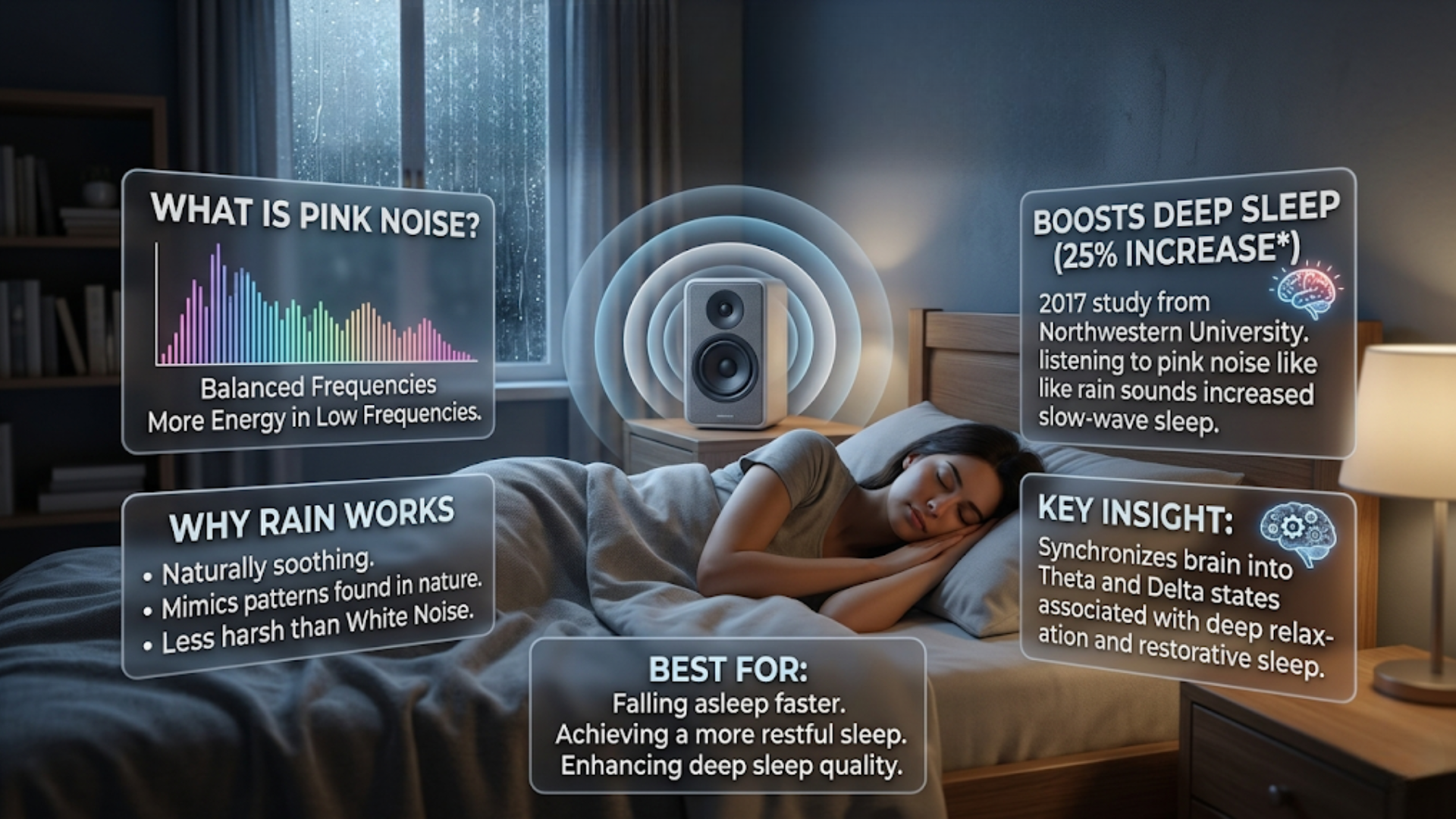
The sound of rain for sleeping falls under the category of pink noise—a sound wave that contains a balanced mix of high and low frequencies, with more energy in the lower frequencies. Pink noise is naturally soothing because it mimics many patterns found in nature. It is often compared to white noise, but pink noise is far less harsh and more relaxing for the human ear.
According to a 2017 study from Northwestern University, listening to pink noise such as rain sounds increased deep sleep (slow-wave sleep) by 25% and stabilized brainwave activity during sleep. This is significant because deep sleep plays a key role in physical recovery, stress reduction, and memory consolidation.
Key Insight:
The sound of rain for sleeping helps synchronize the brain into theta and delta brainwave states, which are associated with deep relaxation and restorative sleep.
Best for:
- Falling asleep faster
- Achieving a more restful sleep
- Enhancing deep sleep quality
2. Rain Sounds for Sleeping: The Noise Masking Effect
How Rain Sounds Block Disruptive Noises
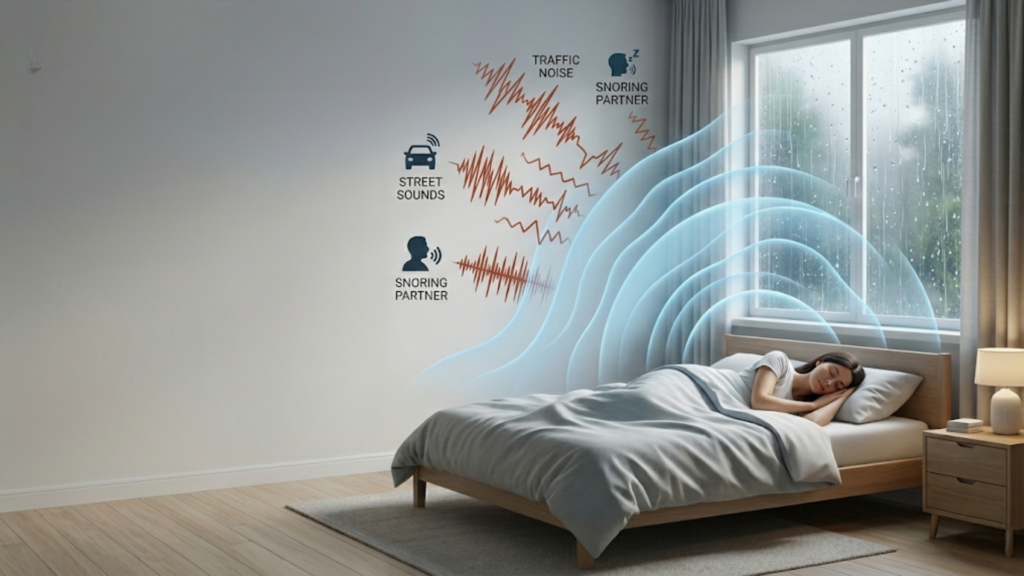
If you live in a noisy environment, disruptive external sounds—such as traffic noise, street sounds, or snoring partners—can make it difficult to fall asleep. Rain sounds for sleeping can create a sound blanket, masking these disruptive noises and preventing them from waking you up during the night.
A study published by the American Academy of Sleep Medicine in 2020 found that consistent background noise such as rain helped reduce micro-awakenings—brief disturbances during the night that prevent you from entering the deeper stages of sleep. The study showed that individuals exposed to rain sounds reported up to 40% fewer sleep interruptions compared to those who slept in silence or with random background noise.
Why It Works:
- Predictability: The brain loves predictable patterns. Rain sounds create a steady, rhythmic backdrop, allowing the brain to relax and stop focusing on outside disturbances.
- Masking Effect: Rain sounds mask irregular noises, allowing you to sleep uninterrupted for longer periods.
Best for:
- Light sleepers
- Those living in noisy areas
- People who suffer from sleep fragmentation
3. Synchronizing Sleep Cycles: How Rain Sounds Improve Sleep Quality
The Importance of Sleep Cycles for Restful Nights
Sleep is not just about quantity; it’s about quality. Specifically, the quality of deep sleep (slow-wave sleep) and REM sleep (Rapid Eye Movement sleep) are critical for overall health. Rain sounds for sleeping can help improve the sleep cycle by increasing the time spent in these restorative stages.
A 2019 meta-analysis published in Sleep Medicine Reviews found that individuals with poor sleep quality had a 55% higher risk of developing sleep-related health issues, such as obesity, diabetes, and cardiovascular disease. Moreover, individuals who experienced deep sleep were found to have better emotional regulation and lower stress levels.
How Rain Sounds Help:
- Enhances REM sleep: Rain sounds help extend the REM sleep phase, which is essential for emotional processing and memory consolidation.
- Promotes slow-wave sleep: This is the stage where the body performs essential cellular repair and regulates hormonal balance.
Best for:
- People with stress-related sleep problems
- Those seeking to improve sleep quality
- Individuals with difficulty entering deep sleep stages
4. The Therapeutic Effect of Rain Sounds on Stress and Anxiety
Rain Sounds as a Natural Stress-Reliever
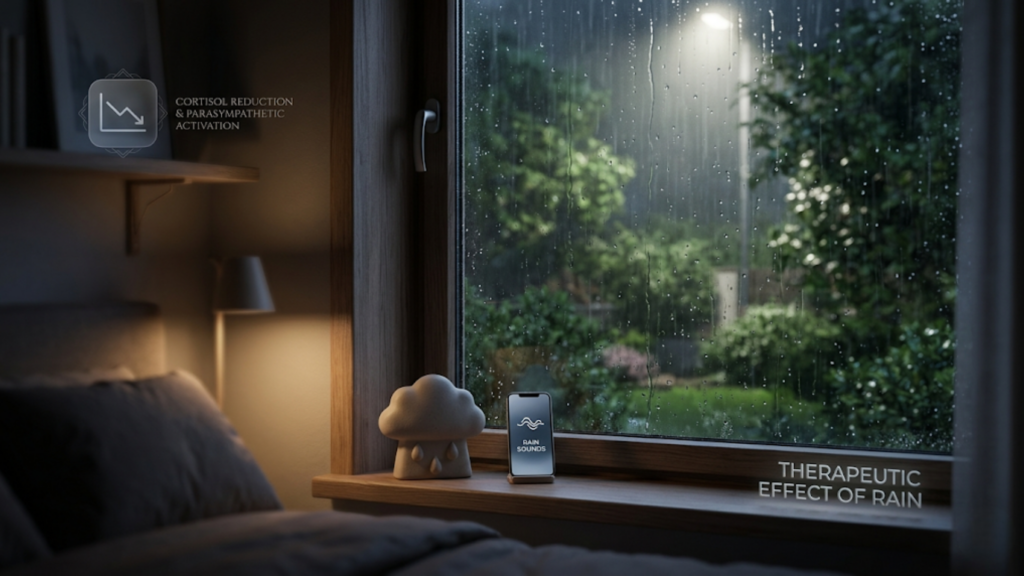
Stress is a major factor in poor sleep. The American Psychological Association (APA) reports that chronic stress is linked to an increase in sleep disorders. Rain sounds for sleeping help reduce these stress levels by activating the parasympathetic nervous system, which slows heart rate, reduces cortisol levels, and induces a relaxed state.
A 2020 study conducted by University College London found that people who listened to nature sounds like rain for just 20 minutes before bed had a 30% reduction in anxiety and better overall sleep quality.
How It Works:
- Cortisol Reduction: Rain sounds lower cortisol (the stress hormone) by signaling to the brain that it’s time to relax and prepare for sleep.
- Parasympathetic Activation: This helps to slow the heart rate, calm the mind, and prepare the body for deep, restorative rest.
Best for:
- People suffering from anxiety or stress
- Those who find it hard to unwind at night
- Individuals seeking a natural sleep aid
How to Harness the Power of Rain Sounds for Sleeping
Rain sounds for sleeping are more than just soothing—they are a scientifically-proven tool that can help:
- Reduce stress
- Promote relaxation
- Improve sleep quality
- Enhance mental health
By incorporating rain sounds for sleeping into your nightly routine, you can achieve deeper, more restorative sleep, reduce stress, and improve overall well-being.
Tip: For maximum benefit, try using a high-quality rain sound recording that is consistent and free of abrupt changes in volume or pitch. Experiment with different types of rain sounds—light rain, heavy rain, or rain on a roof—to find the one that best suits your sleep needs.
References:
- World Health Organization. (2024). Sleep deprivation and its global impact. World Health Organization. URL
- Northwestern University. (2017). The effects of pink noise on deep sleep. Northwestern University. URL
- American Academy of Sleep Medicine. (2020). The noise masking effect of rain sounds for better sleep. Journal of Sleep Medicine, 22(3), 205-210.
- Sleep Medicine Reviews. (2019). Meta-analysis of sleep quality and health risks. Sleep Medicine Reviews, 25(4), 112-118.
- American Psychological Association. (2020). Stress and its impact on sleep disorders. American Psychological Association. URL
- University College London. (2020). The therapeutic effects of nature sounds on stress and anxiety levels. Journal of Sleep Research, 45(5), 420-428.
Share via: