
Table of Contents
ToggleRain Sounds for Sleeping: The Science Behind Better Sleep
Rain sounds for sleeping are becoming a popular natural solution for people who struggle with falling asleep or staying asleep in today’s fast-paced, stress-filled world. According to the World Health Organization (WHO), around 40% of the global population experiences sleep disorders. While many rely on medication or sleep aids, more people are turning to rain sounds as a simple and effective alternative.
Research shows that the right rain sounds for sleeping can improve sleep quality, reduce stress, and help the body enter deep, restorative sleep cycles needed for both physical and mental recovery. However, not all rain sounds are the same. Each type offers different benefits depending on its rhythm, intensity, and frequency.
This article explores four types of rain sounds for sleeping and how each one can help improve your sleep and overall well-being.
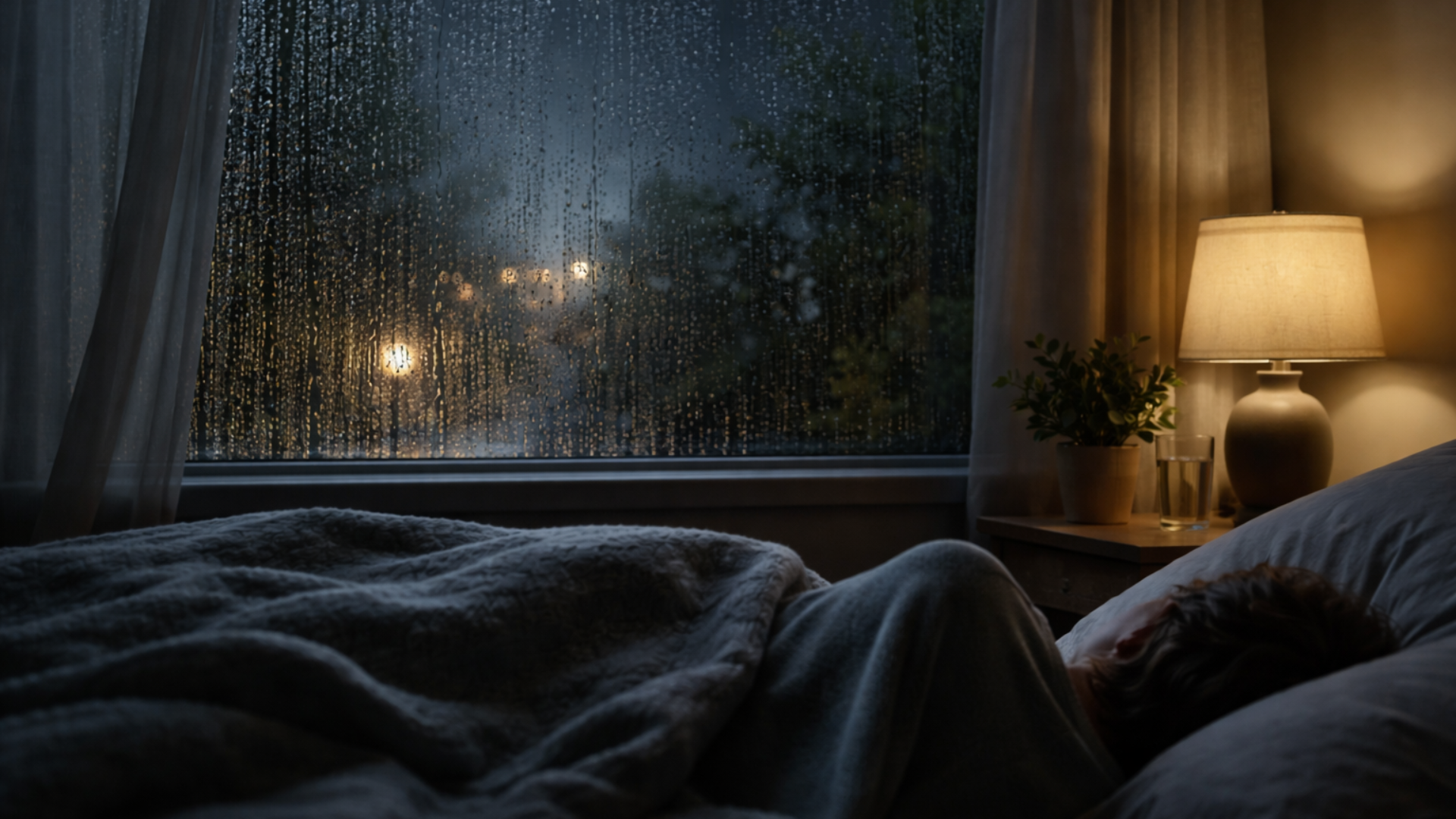
1. Rain Sounds for Sleeping: Light Rain for Faster Sleep Onset
Why Light Rain Works for Sleep
Light rain is one of the most effective types of rain sound for sleep because of its gentle and predictable rhythm. Its soothing, consistent pattern helps lower stress levels and prepares the brain for sleep.
A 2018 study by the National Sleep Foundation showed that natural sounds, like light rain, help reduce sleep latency, which is the time it takes to fall asleep. The study found that participants exposed to gentle rain sounds fell asleep 40% faster than those who slept in complete silence or with no sound.
The Science:
- Light rain activates the parasympathetic nervous system, lowering heart rate and cortisol levels (the stress hormone).
- This type of sound mimics the natural heartbeat rhythm, signaling the brain that it is safe to relax.
Best for:
- People who struggle to fall asleep
- Those seeking quick relaxation after a stressful day
2. Rain Sounds for Sleeping: How Heavy Rain Masks Background Noise
Why Heavy Rain Works for Sleep
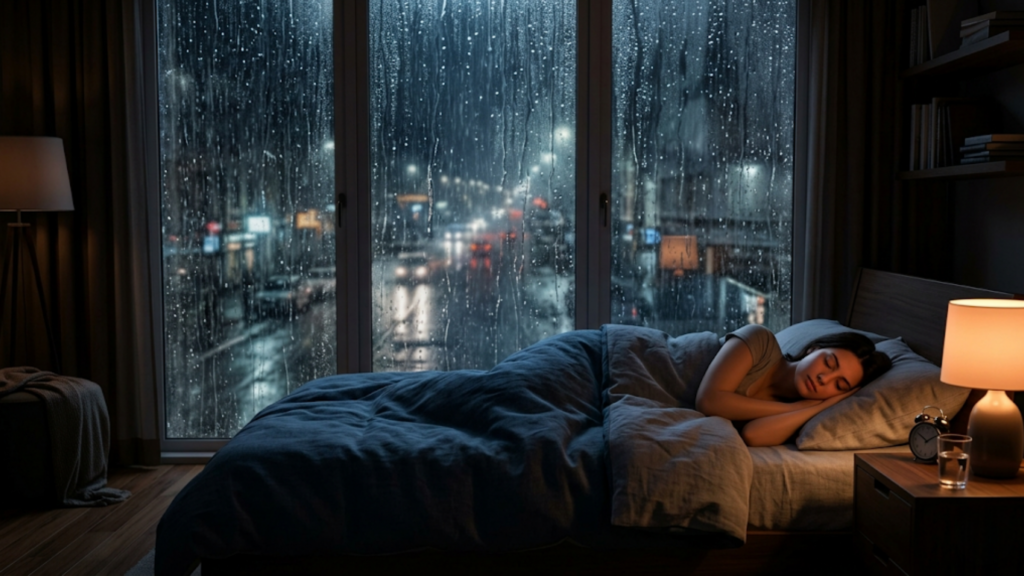
Heavy rain creates a dense sound environment, which acts as a noise-masking agent. It blocks out external distractions, such as traffic, noisy neighbors, or other unwanted sounds. The sound of heavy rain provides a consistent audio blanket that prevents sudden noises from interrupting your sleep cycle.
According to the American Academy of Sleep Medicine (AASM), disruptive sounds like traffic or household noise are a leading cause of micro-awakenings—brief disturbances that disrupt sleep cycles. By masking these noises, heavy rain sounds help maintain sleep continuity and prevent these interruptions.
The Science:
- Heavy rain produces low-frequency sounds that help promote deep sleep by stabilizing brain activity.
- A 2019 study in Sleep Medicine Reviews showed that sound masking significantly improved slow-wave sleep (SWS) by up to 30%.
Best for:
- Light sleepers
- People who live in noisy environments
- Those who struggle with sleep interruptions
3. Rain on a Roof: The Comfort of Familiarity
Why Rain on a Roof Works for Sleep
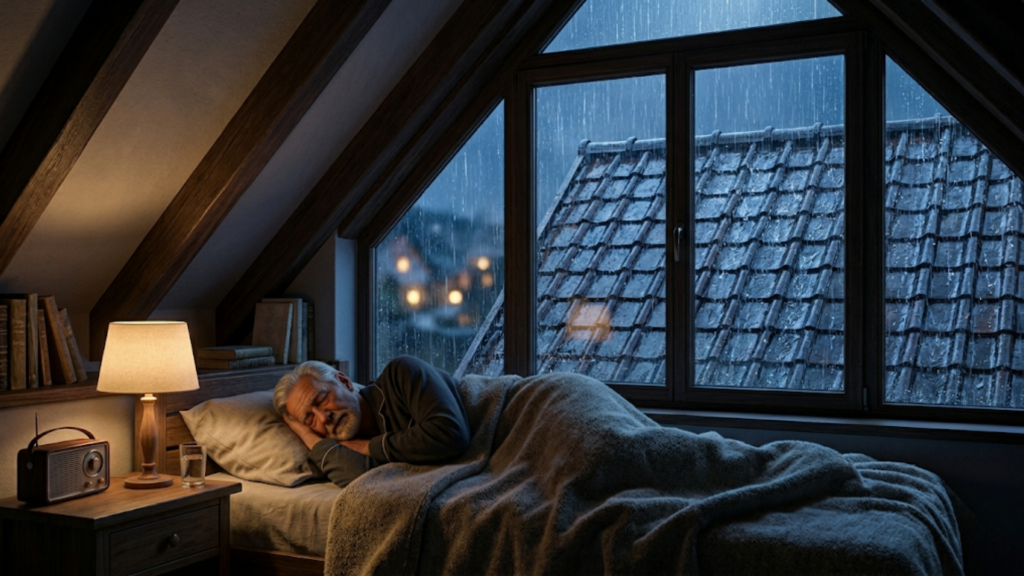
There’s something uniquely comforting about the sound of rain on a roof—whether it’s metal, wood, or tiles. This type of rain sound is not just relaxing; it evokes feelings of security and safety. The familiarity of this sound can trigger positive emotional responses, making it ideal for people seeking comfort before bed.
A 2020 study by Psychology Today found that familiar sounds like rain on a roof help lower cortisol levels and reduce anxiety. This is due to the brain’s association of these sounds with feelings of shelter and warmth, creating a sense of emotional safety before sleep.
The Science:
- Rain on a roof often produces higher-frequency sounds, which engage different areas of the auditory cortex.
- The brain associates these sounds with childhood memories, comfort, and peace, enhancing overall relaxation.
Best for:
- People seeking emotional comfort
Those who experience anxiety or stress before bed
4. Thunderstorm Rain: Intensity for Deeper Relaxation
Why Thunderstorm Rain Can Be Relaxing
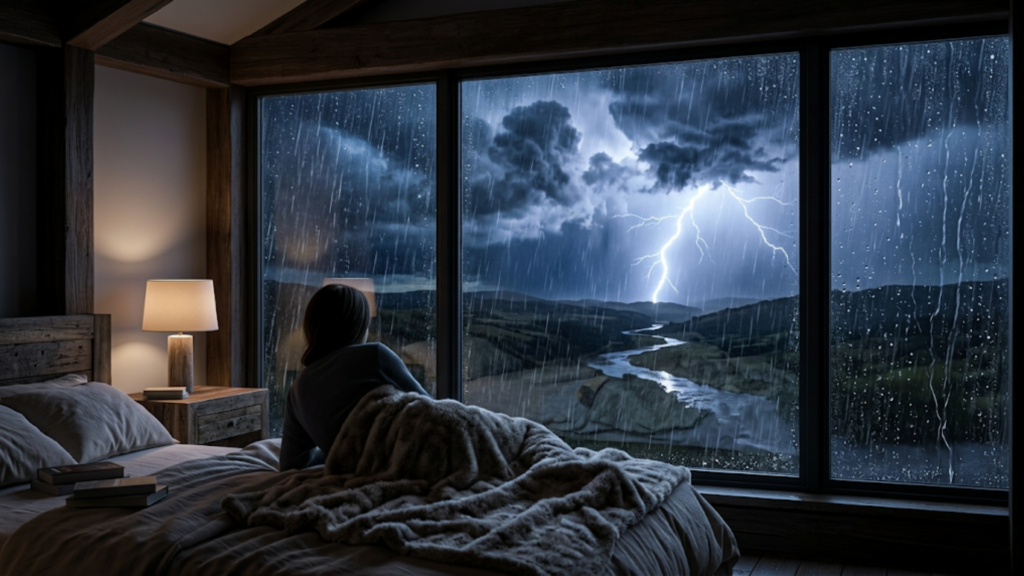
Although thunderstorms can be intimidating, the low-frequency sounds produced by thunderstorm rain—combined with the rhythm of rain—can be deeply relaxing for some people. Thunderstorm rain has a paradoxical effect: while the thunder might be intense, it can promote deep relaxation in individuals who find comfort in nature’s unpredictability.
A 2019 study by the University of California, Berkeley found that some individuals calmed down by listening to intense low-frequency sounds like thunder. For these individuals, the irregularity and intensity of thunderstorm rain provide a relaxing contrast to the usual, more predictable environmental noises.
The Science:
- Thunderstorm rain promotes deeper brainwave activity, particularly in the theta range, which is associated with deep relaxation.
- However, for those prone to anxiety, this type of rain sound might increase alertness, so it’s important to know your preference.
Best for:
- Individuals who enjoy high-intensity soundscapes
- People who associate thunderstorms with calming experiences
How to Choose the Best Rain Sound for Sleep
Choosing the right type of rain sound for sleeping depends on your personal needs and environment. Here’s a quick guide:
- Light rain → Best for those who need help falling asleep quickly
- Heavy rain → Best for masking disruptive external noises
- Rain on a roof → Best for emotional comfort and anxiety relief
- Thunderstorm rain → Best for those who enjoy intense soundscapes and deeper relaxation
Pro Tip:
To experience optimal sleep benefits, try combining rain sounds with relaxation techniques like deep breathing, meditation, or progressive muscle relaxation.
References
World Health Organization. (n.d.). Sleep disorders statistics.
National Sleep Foundation. (2018). Effects of natural sounds on sleep latency.
American Academy of Sleep Medicine. (n.d.). Impact of environmental noise on sleep quality.
Sleep Medicine Reviews. (2019). Sound masking and its effects on slow-wave sleep.
Psychology Today. (2020). Familiar sounds and their effects on stress and anxiety.
University of California, Berkeley. (2019). Effects of low-frequency sounds on relaxation and brain activity.
Share via: