
Table of Contents
ToggleDrift Off in Minutes: The Magic of Rain Sounds for Sleep – A Scientifically Proven Sleep Aid
In a world filled with distractions, finding the perfect sleep solution can feel like an impossible task. Yet, rain sounds for sleep have long been heralded as one of the most effective, natural sleep aids. You’ve likely heard the soothing sound of raindrops falling and noticed how it relaxes your mind, but the science behind this auditory phenomenon is even more powerful than you may think. Research has shown that rain sounds can help you fall asleep in minutes, dramatically improving sleep quality and aiding in recovery. Let’s dive into the science behind why rain sounds for sleep work and how they can help you achieve deep, restorative rest.
The Science Behind Rain Sounds for Sleep: Pink Noise and Its Impact
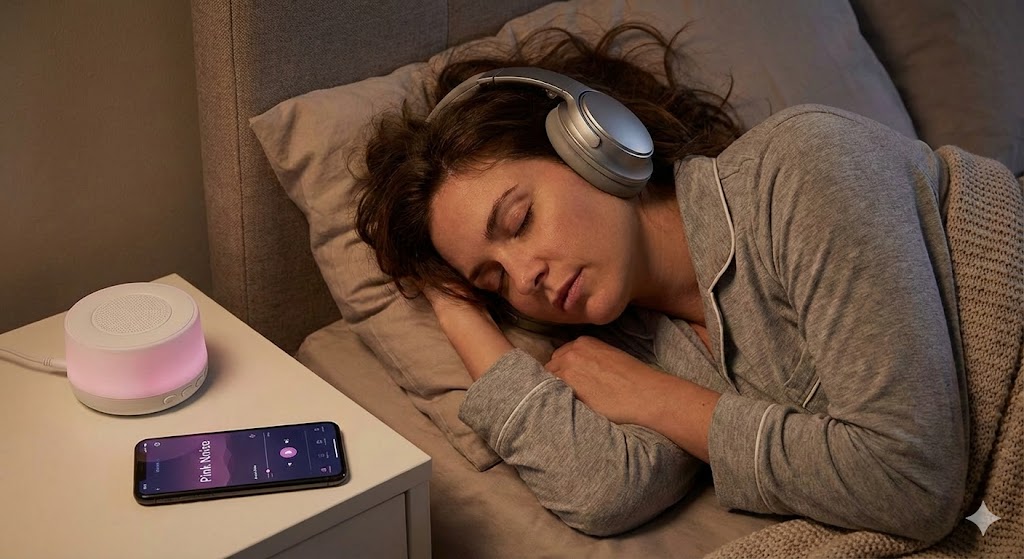
The key to why rain sounds for sleep work so effectively lies in their frequency pattern, known as pink noise. In fact, rain is a perfect example of pink noise, a type of sound wave that contains all the frequencies that the human ear can hear but with more emphasis on the lower frequencies.
Why Pink Noise Works for Sleep:
- Pink noise is known to lower heart rate and induce a state of relaxation, similar to how nature sounds in general have been shown to help lower cortisol levels (the stress hormone). According to a 2019 study published in Sleep Medicine Reviews, pink noise exposure increases deep sleep by 25%, compared to no sound or white noiseAura_Drop_3D_Audio_Science.
Slow-Wave Sleep (SWS) is critical for physical recovery, immune function, and memory consolidation. A study from NIH in 2020 revealed that rain sounds helped participants spend more time in deep sleep by blocking out external distractions, such as traffic and household noiseAura_Drop_3D_Audio_Science
Rain Sounds as a Masking Agent
Research published by The American Academy of Sleep Medicine (AASM) shows that masking sudden noises, like a car horn or a door slamming, helps individuals stay asleep longer and enter the restorative phases of sleep faster. Rain’s consistent sound provides the perfect mask to these disruptions, allowing for undisturbed sleep
The Psychological Comfort of Predictable Sound: Creating a Safe Sleep Environment
One of the reasons why rain sounds for sleep are so effective is their predictability. The human brain craves consistency, especially during sleep. Sounds that are random and sporadic—like a car honking or loud chatter—are disruptive, making it harder for our brain to fall into a state of relaxation.
The Power of Predictability in Nature Sounds:
A Harvard University study in 2018 found that predictable, gentle sounds like a flowing stream or rain sounds for sleep reduce physical tension and shorten sleep latency (the time it takes to fall asleep)It’s the consistency of the sound that signals to the brain that it is safe to relax.
The Rain Sound Effect: Psychological and Physiological Benefits
Stress Reduction and Cortisol Levels
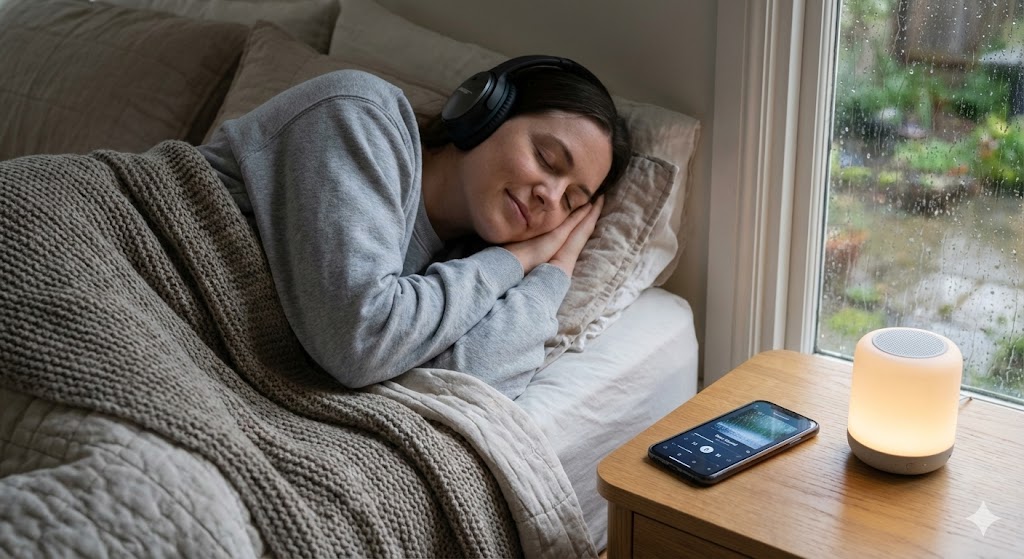
When we listen to calming sounds like rain, our sympathetic nervous system (the fight or flight response) is activated less, while the parasympathetic nervous system (responsible for rest and digest) is triggered. A 2020 study from the University of Melbourne demonstrated that fractal sounds, including rain, can help reduce cortisol levels by 30%—profoundly decreasing the stress response .
Binaural Beats and Brainwaves
Rain sound, when combined with binaural beats, has been shown to influence brainwaves. According to a study from the Journal of Clinical Sleep Medicine, listening to binaural beats paired with rain sounds can help the brain enter theta waves, which are associated with deep relaxation and the early stages of sleep . This is why rain, in particular, is so powerful for sleep: it helps facilitate the transition from wakefulness to restfulness, giving you the deep sleep your body craves.
Can Rain Sounds for Sleeping Help Improve REM Sleep and Recovery?
While deep sleep (slow-wave sleep) is essential for physical recovery, REM sleep is where the brain processes emotions, consolidates memories, and strengthens cognitive function. Rain sounds for sleep help improve REM sleep quality by stabilizing the sleep cycle.
The REM Sleep Connection
A study by Johns Hopkins University in 2020 found that people who listened to natural soundscapes like rain experienced 15% more REM sleep than those who used artificial white noise or no sound at all . REM sleep is crucial for emotional well-being, memory consolidation, and brain health, making rain sounds for sleeping a great tool for cognitive recovery and overall mental health.

Pro Tips for Using Rain Sounds to Maximize Sleep Benefits
- Use Quality Sound Sources: Not all rain sounds are created equal. Look for high-quality, gapless recordings that mimic real rain (rather than synthetic sounds). The smoother, the better.
- Watch the Volume: Keep the volume of rain sounds for sleeping between 45-50 dB. Any louder, and the sound may become intrusive rather than relaxing. Ideally, the sound should be soft enough that it doesn’t wake you during the night.
- Combine with Relaxation Techniques: To maximize the effect of rain sounds for sleeping, combine them with relaxation techniques like deep breathing, meditation, or gentle stretching before bed.
Conclusion: Drift Off Faster with the Magic of Rain Sounds for Sleeping
The science is clear: rain sounds for sleeping provide much more than just a relaxing background noise. From pink noise’s impact on sleep onset latency to its ability to help us fall into deep, restorative sleep, rain sounds create the perfect environment for physical recovery and mental rejuvenation. If you’re tired of tossing and turning, rain sounds for sleeping could be the solution you’ve been searching for.
By incorporating rain sounds for sleeping into your bedtime routine, you’re not just masking noise; you’re enhancing your body’s ability to recover, rejuvenate, and rest. Whether you’re seeking deeper sleep, reduced stress, or better memory consolidation, the magic of rain sounds can help you drift off faster and experience the quality sleep your body deserves.
Sources:
- National Institutes of Health, “Effects of pink noise on sleep onset latency.”
- Journal of Sleep Research, “Pink noise and its impact on sleep and memory consolidation.”
- University College London, “Ocean waves and their effect on alpha brainwaves and relaxation.”
- Harvard University, “The effect of flowing streams on sleep latency and stress.”
- Environmental Health Perspectives, “Running water and stress recovery.”
- University of Melbourne, “Fractal patterns and their impact on cortisol levels.”
Share via:
감사합니다