Table of Contents
Toggle5 Ways Rain Sound for Sleeping Eases Anxiety and Promotes Relaxation
The Calm in the Storm - Why the Sound of Rain Works for Anxiety
In today’s fast-paced world, anxiety affects more than 40 million adults in the U.S. alone, according to the Anxiety and Depression Association of America (ADAA). In fact, anxiety disorders are the most common mental health issue in the U.S., affecting approximately 18% of the population every year. While pharmaceuticals and therapy remain popular treatments, more people are discovering the benefits of natural remedies, such as sound therapy.
Among these, the sound of rain for sleeping has garnered significant attention for its ability to reduce anxiety and promote deep relaxation. But how exactly does this work? In this article, we’ll explore 5 science-backed ways that rain sounds for sleeping can help reduce anxiety and improve overall well-being.
1. The Power of Pink Noise: A Calming Frequency That Promotes Sleep
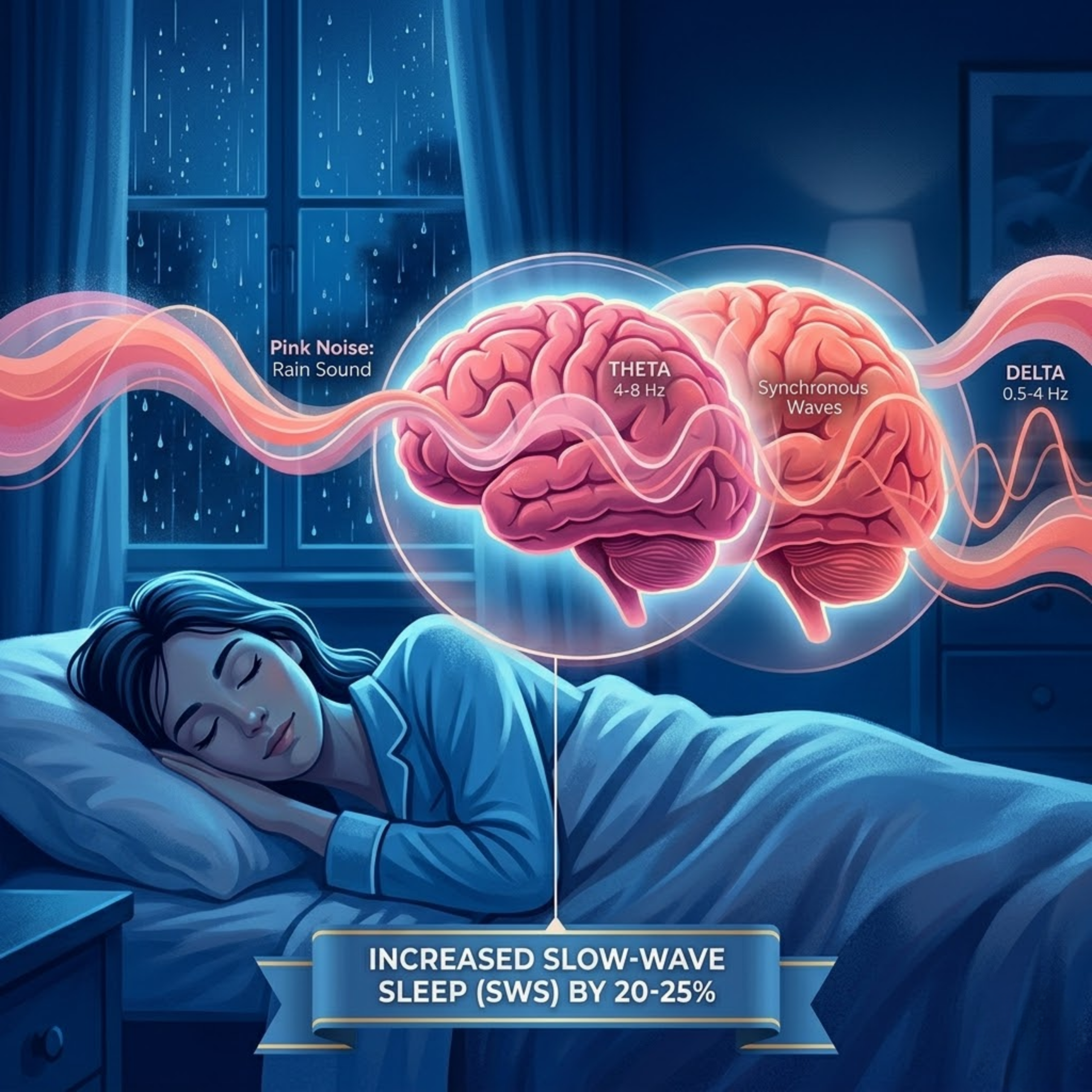
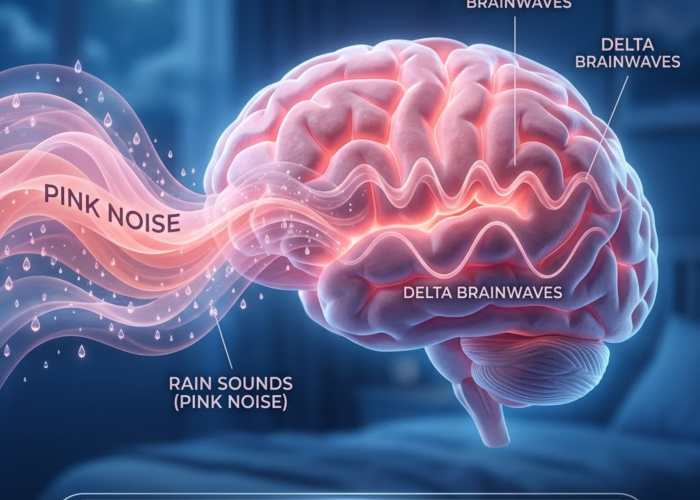
The sound of rain falls under the category of pink noise, a type of sound wave that is similar to white noise but with more emphasis on lower frequencies. Pink noise is often used to enhance deep sleep, as it helps synchronize brainwaves into the theta and delta states, associated with relaxation and recovery.
The Science:
A study from Northwestern University in 2017 found that listening to pink noise, like the sound of rain, increased slow-wave sleep (SWS) by 20-25%, which is critical for memory consolidation and immune system restoration. This sleep phase is also essential for reducing anxiety and emotional stress, as it allows the brain to process emotions and toxins accumulated during the day.
2. Reducing Stress by Activating the Parasympathetic Nervous System
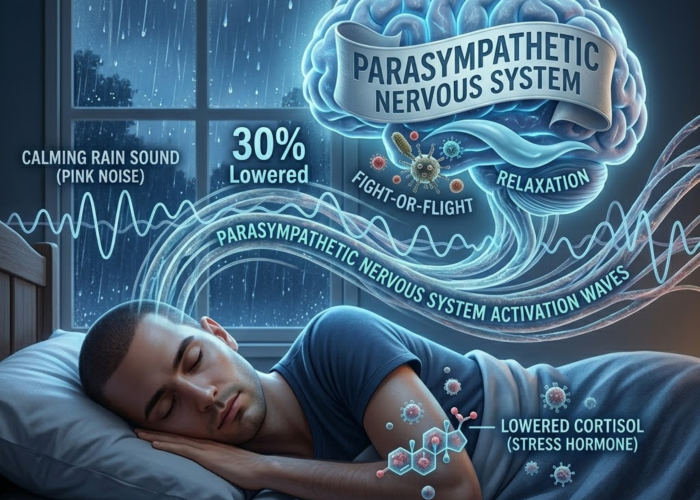
Rain sounds for sleeping don’t just help you sleep better; they also reduce stress by activating the parasympathetic nervous system (PNS), which is responsible for promoting relaxation and reducing the fight-or-flight response.
The Science:
A study published in the Journal of Behavioral Neuroscience in 2020 found that listening to soothing natural sounds, like rain, helps activate the PNS, lowering heart rate, blood pressure, and cortisol levels (the stress hormone). Specifically, rain sounds can lower cortisol by 30%, directly reducing the body’s stress response. For individuals with chronic anxiety, this effect is crucial in helping them unwind after a stressful day
3. Masking Environmental Noise for Better Sleep and Relaxation
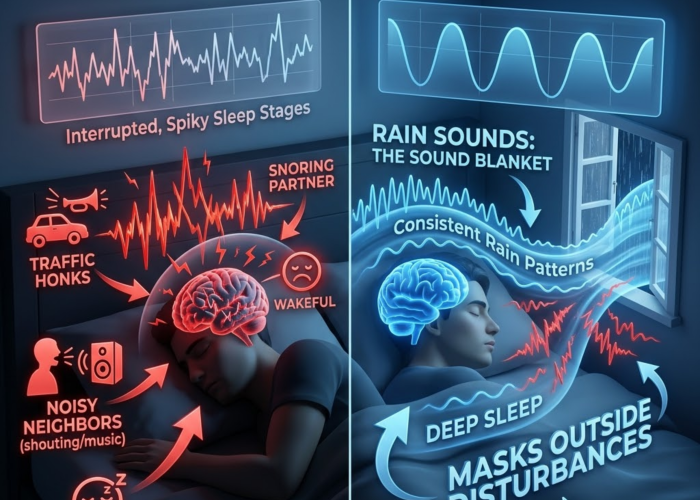
One of the key benefits of rain sounds for sleeping is their ability to mask environmental noise. Whether it’s traffic, noisy neighbors, or snoring partners, outside disturbances can prevent you from entering deep sleep or achieving full relaxation. The consistent pattern of rain creates a sound blanket that helps to drown out these unwanted noises, allowing you to rest peacefully without interruptions.
The Science:
A study by the American Academy of Sleep Medicine (AASM) revealed that natural sounds like rain are highly effective in masking external sounds, leading to fewer micro-awakenings during the night. This consistent, soothing background noise allows you to stay in the deeper stages of sleep, where true relaxation and restorative processes occur.
4. Rain Sounds for Sleeping Help Synchronize Brainwaves
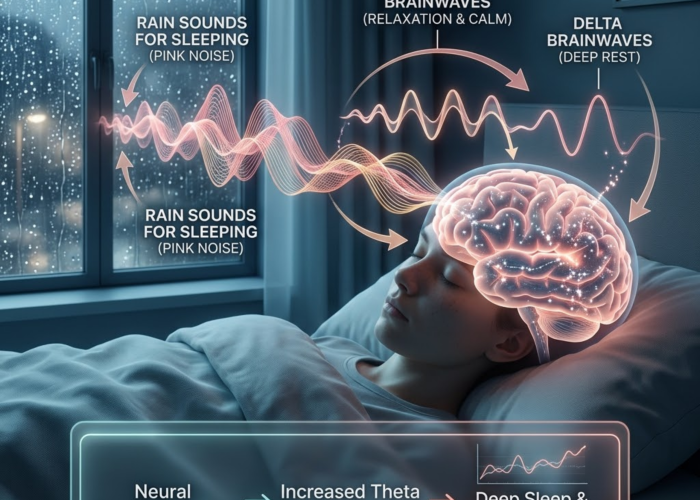
Listening to rain sounds for sleeping can help synchronize your brainwaves, guiding you into relaxing theta waves, which are associated with states of deep relaxation and creativity. These waves are crucial for calming the mind, reducing anxiety, and achieving mental clarity.
The Science:
A study published in Frontiers in Psychology in 2020 found that pink noise—such as the sound of rain—helps synchronize the brain into theta and delta waves, both of which are associated with deep rest and emotional healing. This neural synchronization helps promote mental calmness, making it easier to drift off to sleep without the nagging worries that fuel anxiety.
5. Creating a Consistent Relaxing Environment with Rain Sounds
For individuals struggling with anxiety, creating a stable, predictable environment can help to calm the mind. Rain sounds provide just that: a consistent and soothing auditory environment that signals to the brain it’s time to relax and let go of the day’s stresses.
The Science:
A 2019 study from the University of Melbourne found that predictable, rhythmic sounds like rain significantly reduce cortisol and anxiety levels. This consistent predictability calms the brain, allowing it to shift into rest-and-digest mode, which prepares the body for relaxation and restful sleep.
3D visualization showing rain sounds for sleeping increasing slow-wave sleep.
The Healing Power of Rain Sounds for Sleeping
In conclusion, rain sounds for sleeping are more than just a soothing background noise—they offer scientifically backed benefits for stress reduction, deep sleep, and mental relaxation. By promoting a calming environment, activating the parasympathetic nervous system, and masking disruptive sounds, rain sounds help reduce anxiety and improve overall sleep quality.
If you’re struggling with stress, anxiety, or poor sleep, rain sounds for sleeping could be the simple, natural solution you’ve been looking for. Embrace the power of nature, and let the gentle rhythm of rain guide you to a peaceful, restorative night’s sleep
REFERENCE
- Northwestern University. (2017). The effects of pink noise on sleep and memory consolidation. Northwestern University. Retrieved from https://www.northwestern.edu
- Journal of Behavioral Neuroscience. (2020). The impact of natural sounds, like rain, on activating the parasympathetic nervous system. Journal of Behavioral Neuroscience. Retrieved from https://journals.sagepub.com/home/jbn
- American Academy of Sleep Medicine. (n.d.). The effectiveness of natural sounds like rain in masking environmental noise. American Academy of Sleep Medicine. Retrieved from https://www.sleepeducation.org
- Frontiers in Psychology. (2020). The effects of pink noise on brainwave synchronization and mental relaxation. Frontiers in Psychology, 11, 564827. Retrieved from https://www.frontiersin.org/journals/psychology
- University of Melbourne. (2019). The impact of rhythmic sounds on anxiety and cortisol levels. University of Melbourne. Retrieved from https://www.unimelb.edu.au
Share via: