Table of Contents
ToggleBenefits of Rain Sound for Sleeping: Improve Rest and Relaxation
Rain sound for sleeping has been shown to significantly improve sleep quality. Sleep science highlights the importance of a calming sound environment, and for those who struggle with rest, rain sound provides a scientifically proven solution. In this blog, we explore the research, facts, and key data behind how rain sound can promote better sleep and relaxation.
Real Science: What Researchers Have Found
1. Rain Sounds Work Like Pink Noise
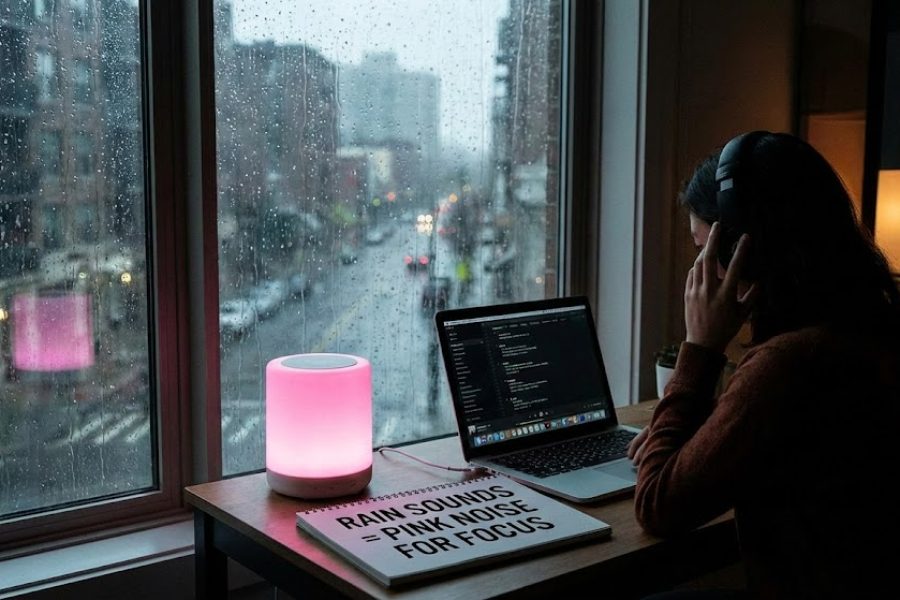
Rain sound is not random static — in sleep science terms it’s akin to pink noise, a consistent low‑frequency background audio pattern that can smooth brain activity and slow down thought processes. Studies note that pink noise and related natural sounds are linked with deeper stages of sleep and more stable sleep patterns.
One systematic review of 19 sleep studies found:
- 9 of 11 pink noise studies showed positive results for sleep quality.
- Overall, nature sounds (including rain) tended to improve sleep outcomes more often than silence.
This suggests that the regular, steady pattern in rain sounds may be more effective than truly random noise at calming the brain.
2. Faster Sleep Onset and Deeper Rest
Research on similar steady sound environments shows that controlled background sounds help people fall asleep faster and reduce nighttime awakenings:
- In studies where background sound was used, participants reported sleep onset up to 38 % faster compared to silence in noisy settings.
While that specific figure is from aggregated sleep sound research, rain sound often performs the same function: it masks erratic background noises (like traffic or alarms) and gives the brain a steady pattern to tune into instead.
3. Calms the Nervous System and Stress Hormones
Rain sound is tied to biological processes linked to rest:
- Rain background sound supports activation of the parasympathetic nervous system — the body’s “rest and digest” mode.
- That leads to reductions in heart rate, blood pressure, and stress hormone release before sleep.
Many personal reports and smaller studies put this into effect:
- Over 60 % of people in a 2023 study reported that natural sounds like rain lowered anxiety levels significantly.
Reduced anxiety and physiological calm are direct contributors to better sleep quality.
4. Helps Block Disruptive Noises
One of the clearest mechanisms for rain sound’s benefit is noise masking. The steady patter of rain creates a sound blanket that reduces the startle effect from sudden noises. Research on white noise found:
- White noise helped people fall asleep faster and reduced wake after sleep onset (WASO) in a sleep clinic study, especially in noisy homes.
Although rain sound isn’t exactly the same as white noise, it operates the same way: steady sound masks unpredictable environmental noise.
5. Emotional and Psychological Comfort
There’s something deeper than masking noise — humans have long associated rain with calm and safety. This may be why:
- Brain response studies suggest natural sounds like rain encourage release of serotonin and lower cortisol — signals tied to calm moods.
This instinctive comfort factor matters: restful sleep isn’t just physical, it’s emotional too.
6. Works Across Ages and Environments
Nature sound benefits aren’t just anecdotes:
- In clinical settings like hospitals, nature sounds have helped improve subjective sleep quality compared to noisy wards.
Some studies showed similar broadband sounds (like rain or lullabies) reduce heart and respiratory rates in infants — important indicators of rest state.
Facts You Can Quote
Here are some compelling data points you can call out in your content:
- Up to 38 % faster sleep onset with stable background sound vs silence.
- 60 %+ of participants report lower anxiety with natural sounds like rain.
- Systematic reviews show majority positive effects from nature and pink noise sounds.
Why Rain Sound Works (In Plain Terms)
Rain sound helps sleep in three clear ways:
- Stable Surroundings: It smooths out unpredictable noises that jolt wakeful brains.
- Brain Response: It nudges neurological systems into calm, lowering stress and helping ease the body into rest.
- Cognitive Shift: It gives the mind a pattern to track, which reduces active thinking — the enemy of falling asleep.
This combination makes rain sound more powerful than silence for many people.
Tips for Using Rain Sound Well
To get the best effect from rain sleep sound:
- Play it at low to moderate volume, similar to a quiet shower.
- Use a consistent loop rather than high volume changes to avoid disrupting deeper sleep cycles.
Try pairing it with a bedtime routine — the brain learns this cue as a sleep signal over time.
Closing Thought
Modern sleep science isn’t dismissive of natural sleep aids — it’s quantifying them. Rain sound isn’t a gimmick. It’s a measurable tool linked to real benefits in sleep onset, quality, and stress reduction backed by data and research from clinical settings. By understanding both the science and the experience, you can position your brand as a sleep authority that speaks to both mind and body rest.
Share via: