
Table of Contents
ToggleRain Sounds for Sleeping and Obesity: Why Sleep Quality Matters for Weight Health
The Overlooked Link Between Sleep and Obesity
In 2024, the World Health Organization estimated that more than 1 billion people worldwide live with obesity, a number that has nearly tripled since 1975. Yet what many people overlook is that one of the most powerful predictors of weight gain isn’t diet alone—it’s sleep quality.
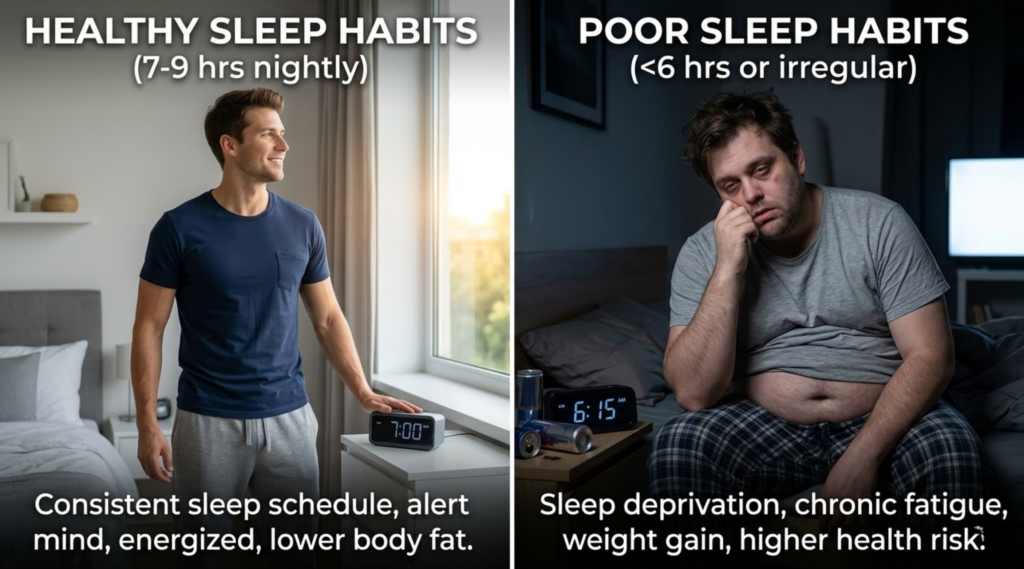
Sleep deprivation quietly disrupts the body’s metabolic system. According to the Centers for Disease Control and Prevention (CDC), nearly 1 in 3 adults in the United States does not get the recommended 7–9 hours of sleep per night. This chronic lack of rest has been linked to increased appetite, slower metabolism, hormonal imbalance, and higher obesity risk.
This is where rain sounds for sleeping enter the conversation. What might seem like a simple relaxation technique is increasingly recognized as a powerful sleep-supporting tool backed by neuroscience and sleep research.
Sleep scientists are discovering that natural soundscapes—especially rain sounds for sleeping—can stabilize brain activity, improve deep sleep cycles, and support metabolic health, which may indirectly influence weight regulation.
In other words, improving sleep may be one of the most overlooked strategies in preventing obesity.
The Science: How Sleep Deprivation Contributes to Obesity
The Hormonal Chain Reaction
When sleep is disrupted, the body’s hormonal system shifts dramatically.
Two hormones control hunger:
Ghrelin – the hormone that stimulates appetite
Leptin – the hormone that signals fullness
A landmark 2004 study from the University of Chicago Sleep Laboratory found that participants who slept only 4 hours per night experienced a 28% increase in ghrelin levels and an 18% drop in leptin levels.
The result?
A 24% increase in hunger, particularly cravings for high-calorie carbohydrates and sugary foods.
Dr. Eve Van Cauter, one of the leading researchers on sleep metabolism, explains:
“Sleep loss alters the balance of hormones that regulate hunger and appetite, creating a biological drive to overeat.”
This means that sleep deprivation biologically pushes the body toward weight gain.
Improving sleep quality—through techniques like rain sounds for sleeping—can help restore stable sleep cycles and support hormonal balance.

Why Deep Sleep Is Critical for Weight Regulation
Metabolism Happens While You Sleep
During deep sleep (slow-wave sleep), the body performs essential metabolic functions:
- Fat metabolism regulation
• Blood sugar stabilization
• Growth hormone release
• Cellular repair
• Appetite hormone regulation
A 2019 meta-analysis published in Sleep Medicine Reviews found that individuals with poor sleep quality had a 55% higher risk of obesity compared to those with consistent deep sleep patterns.
Deep sleep is also when the body releases growth hormone, which plays a key role in fat metabolism and muscle maintenance.
Without enough deep sleep:
- Metabolism slows
• Fat storage increases
• Insulin sensitivity decreases
Improving deep sleep—something rain sounds for sleeping may help support—can therefore influence long-term weight health.
How Rain Sounds for Sleeping Improve Sleep Quality
The Neuroscience of Pink Noise
Rainfall produces what scientists call pink noise, a balanced sound frequency that mimics many patterns found in nature.
Unlike white noise, pink noise distributes sound energy more evenly across frequencies, creating a softer and more natural auditory environment.
A 2017 study from Northwestern University found that pink noise stimulation during sleep increased deep sleep activity and improved memory retention by 20–25%.
Rain sounds for sleeping naturally contain these pink noise characteristics.
This creates three powerful sleep benefits:
1. Noise Masking
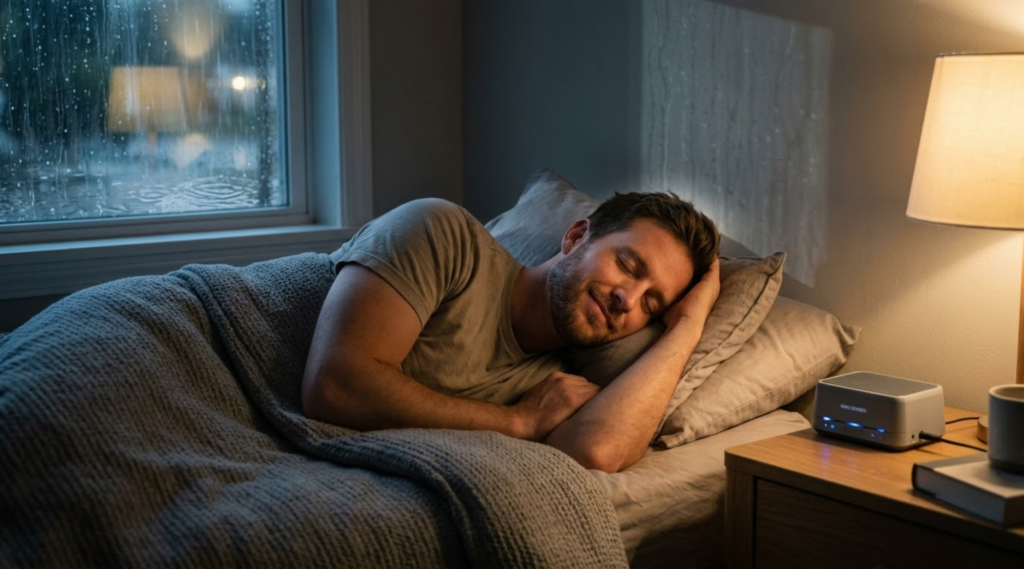
Rain sounds for sleeping mask sudden environmental sounds such as traffic, footsteps, or doors closing.
This prevents micro-awakenings, which interrupt sleep cycles.
2. Brainwave Synchronization
The rhythmic nature of rainfall helps guide the brain into theta and delta brainwave states, which are associated with deep sleep.
3. Nervous System Relaxation
Rain sounds activate the parasympathetic nervous system, shifting the body into a rest-and-digest state rather than a stress response.
Together, these effects create an environment where the body can enter deeper sleep more easily.
The Stress–Obesity Connection
Sleep deprivation doesn’t just influence hunger—it also increases stress hormones.
When sleep is disrupted, the body releases higher levels of cortisol, the primary stress hormone.
Chronic cortisol elevation leads to:
- Increased abdominal fat storage
• Slower metabolism
• Higher blood sugar levels
• Stronger cravings for high-energy foods
A 2020 study from the University of Colorado found that individuals with elevated cortisol levels were significantly more likely to gain weight during periods of poor sleep.
Rain sounds for sleeping may help reduce this stress cycle by creating a consistent relaxation environment before and during sleep.
Lower stress levels often translate to better sleep quality, improved hormone balance, and healthier metabolic regulation.

Sleep Duration and Obesity Risk: The Numbers Are Striking
Large-scale population studies reveal just how strong the sleep-obesity relationship is.
According to the Nurses’ Health Study involving over 68,000 women, those who slept 5 hours or less per night were 32% more likely to experience major weight gain over 16 years.
Similarly, research from the National Institutes of Health found that individuals sleeping fewer than 6 hours nightly had a significantly higher BMI and waist circumference.
The conclusion from sleep scientists is becoming increasingly clear:
“Sleep duration is a critical factor in maintaining healthy body weight.” — NIH Sleep Research Division
Improving sleep quality—potentially with tools like rain sounds for sleeping—can therefore play a role in long-term metabolic health.

Why Natural Soundscapes May Be the Future of Sleep Health
Sleep technology is evolving rapidly, but the most effective solutions may still come from nature.
Natural soundscapes—including rain sounds for sleeping, ocean waves, and flowing water—have been shown to reduce stress, stabilize breathing patterns, and improve relaxation responses.
Unlike pharmaceutical sleep aids, natural sound environments offer:
- No dependency risks
• No chemical side effects
• Continuous support for natural sleep cycles
This is why many sleep experts are exploring sound-based sleep environments as a long-term wellness strategy.
Final Thoughts: Better Sleep, Healthier Weight
Obesity is often framed as a problem of willpower, but science increasingly shows it is deeply connected to biological systems—especially sleep.
Sleep deprivation alters hormones, metabolism, stress responses, and appetite regulation. Over time, these changes significantly increase the risk of weight gain and obesity.
Improving sleep quality is therefore one of the most powerful—and overlooked—steps toward better health.
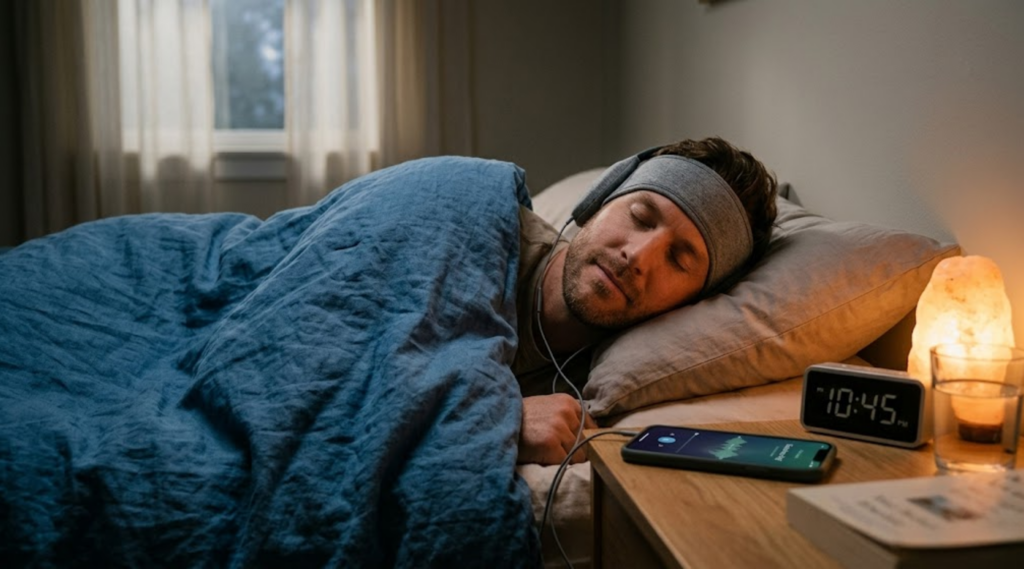
Simple tools like rain sounds for sleeping can help create a calm and stable sleep environment that supports deeper rest.
And when the body sleeps better, it regulates hunger better, manages stress better, and maintains healthier metabolic function.
Sometimes, the path to better health doesn’t begin in the kitchen or the gym.
Sometimes, it begins with a good night’s sleep—and the gentle rhythm of rainfall.
REFERENCE
- World Health Organization. (2024). Obesity and overweight. World Health Organization. Retrieved from https://www.who.int/news-room/fact-sheets/detail/obesity-and-overweight
- Centers for Disease Control and Prevention. (n.d.). Sleep and sleep disorders. Centers for Disease Control and Prevention. Retrieved from https://www.cdc.gov/sleep/index.html
- University of Chicago Sleep Laboratory. (2004). The impact of sleep deprivation on hunger hormones. University of Chicago. Retrieved from https://www.uchicagomedicine.org
- Sleep Medicine Reviews. (2019). Meta-analysis on the relationship between sleep quality and obesity. Sleep Medicine Reviews, 45, 101-113. Retrieved from https://www.journals.elsevier.com/sleep-medicine-reviews
- Northwestern University. (2017). Pink noise stimulation and its impact on deep sleep. Northwestern University. Retrieved from https://www.northwestern.edu
- University of Colorado. (2020). Cortisol levels and weight gain during poor sleep. University of Colorado. Retrieved from https://www.colorado.edu
- National Institutes of Health. (n.d.). Sleep duration and obesity risk. National Institutes of Health. Retrieved from https://www.nih.gov
Share via: