Table of Contents
ToggleThe Science of Sleep: Why the Sound of Rainfall to Sleep Helps Your Brain Beat Insomnia
Having trouble sleeping or quieting your mind at night? Learn why the sound of rainfall to sleep, along with pink and white noise , helps calm the brain and improve sleep quality, and how Aura Drop’s 3D soundscapes support deeper rest.
Introduction: The Silent Epidemic of the Ceiling Stare
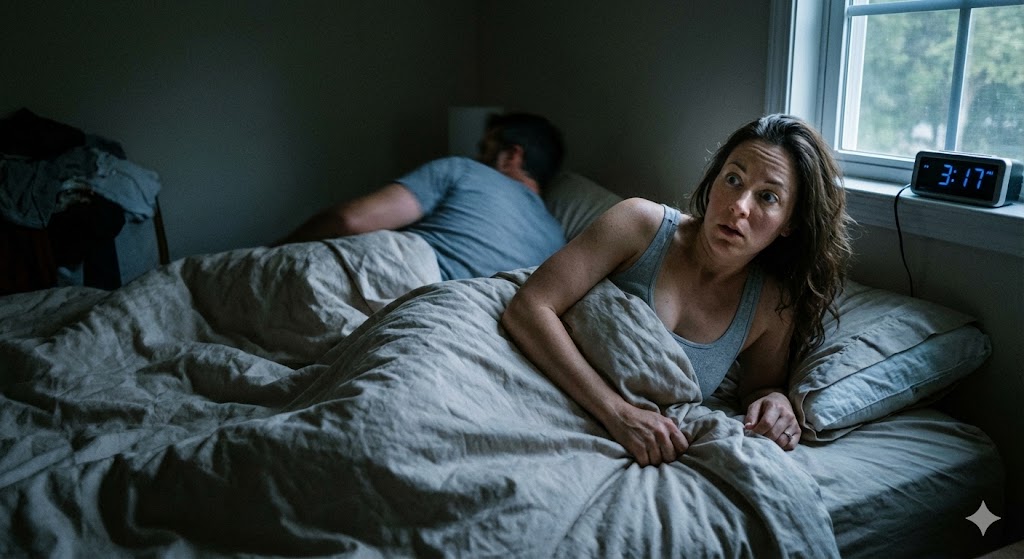
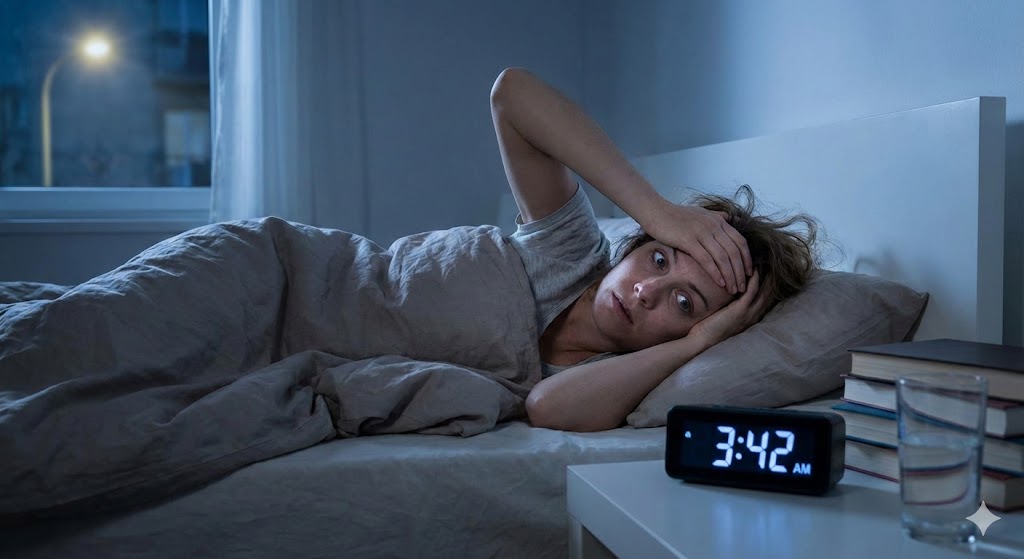
It’s 2:00 AM. The house is quiet. The lights are off. You are exhausted, but your eyes stay open, fixed on the ceiling. Your mind jumps between tomorrow’s to-do list and things you wish you had done differently.
You are not alone.
Health data shows that nearly one in three adults does not get enough sleep. Caffeine, blue light, and stress often take the blame. But one factor is often missed — sound, or more specifically, the lack of the right sound.
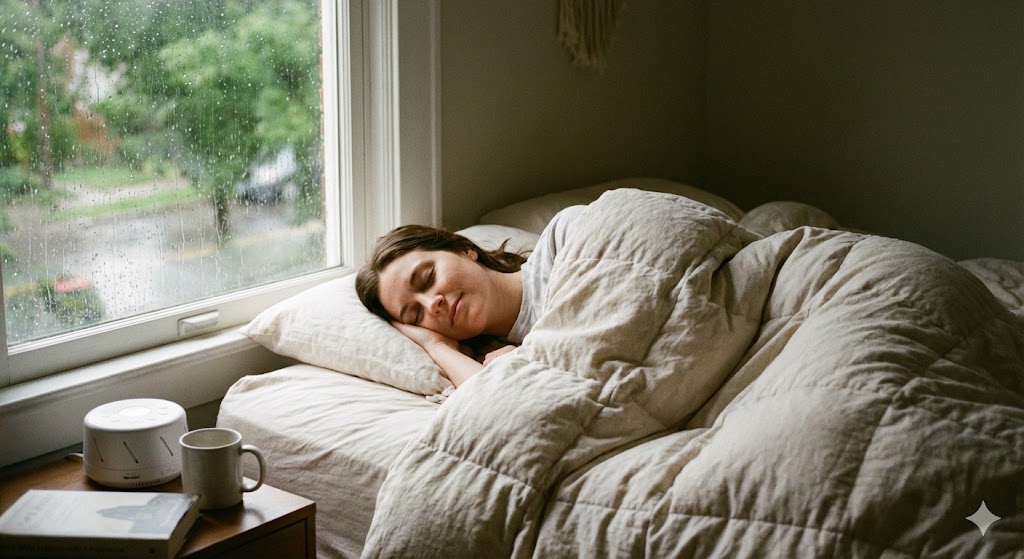
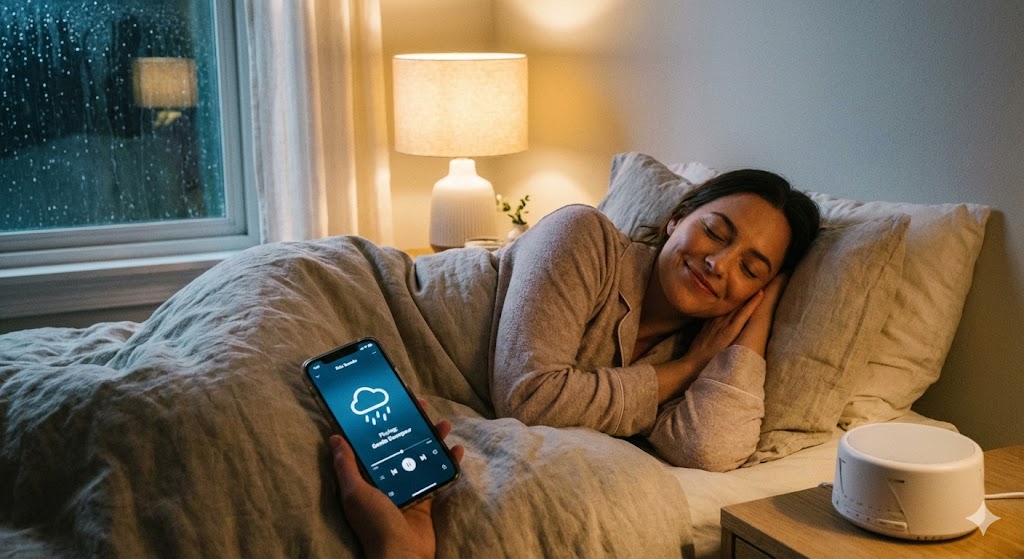
For most of human history, people did not sleep in silence. Nights were filled with wind, insects, and the sound of rainfall to sleep in the background. Today, science is catching up to what the body has always known: certain sounds help the brain feel calm and safe enough to rest.
This article explains why the brain responds so strongly to rain sounds, how pink noise is different from white noise , and how modern sound design like Aura Drop brings the calming sound of rainfall to sleep, back into modern nights.
1. The evolutionary link: why the sound of rain signals safety
To understand why rain sounds support sleep, we need to look at early human survival.
At night, silence often meant danger. A quiet environment could signal predators nearby. Rain changed that situation.
- predators were less active during rainfall, lowering risk
- rain masked human scent , making tracking harder
- steady rainfall covered sharp noises like footsteps or snapping twigs
Over time, the brain learned that rain meant fewer threats and safer rest. That response still remains today.
When the brain hears the sound of rainfall to sleep, the amygdala, which controls fear and alertness, becomes less active. The nervous system begins to slow down and move toward rest.
This reaction is not imagined. It is a biological memory, shaped over thousands of years.
2. Pink noise vs white noise: why rain sounds feel better
Many people place rain sounds under white noise, but from a science point of view, rain is closer to pink noise (often searched as pink noise).
White noise
- equal strength across all sound frequencies
- similar to static, a fan, or TV noise
- can feel sharp or tiring for some listeners
Pink noise
- stronger low frequencies
- softer high frequencies
- feels deeper, smoother, and more natural
Neuroscience studies show that pink noise supports slow-wave sleep, which is the deepest stage of rest. This is when the brain sorts memories and the body focuses on repair.
Natural sounds like rainfall, ocean waves, and wind are examples of pink noise. The sound of rainfall to sleep,reduces sudden silence while keeping the brain calm, without causing mental stimulation.
This balance is why rain sounds feel more comforting and easier to sleep with than mechanical noise.
3. The sound blanket effect: how rain masks disruptions
The biggest problem for sleep is not noise itself, but sudden changes in noise.
In a silent room, even small sounds become noticeable:
- a car door outside
- a creaking floorboard
- a partner turning in bed
These brief sounds can cause micro-awakenings that break natural sleep cycles, even if you do not fully wake up.
Rain sounds act like a sound blanket. A steady layer of pink noise increases the brain’s tolerance to sudden changes, helping the body stay relaxed and asleep for longer periods.
This is why the sound of rainfall to sleep often works better than silence or uneven background noise. It creates consistency, which the brain reads as safety.
4. Why looped sounds can keep the brain awake
Many sleep apps rely on short audio loops. The issue is pattern recognition.
The brain is very good at spotting repetition. Once a pattern is noticed, alertness increases, making it harder to fully relax.
High-quality rain sound design avoids this by:
- using long, non repeating recordings
- creating depth and space instead of flat audio
- avoiding predictable sound patterns
The sound of rainfall to sleep works best when it feels natural and unscripted. Aura Drop’s 3D soundscapes are designed to mirror real rain, falling above, around, and in the distance, similar to how rain is experienced outdoors.
By removing repetition and anticipation, the brain stays calm and stops waiting for what comes next, allowing deeper relaxation and more stable sleep.
5. How to use rain sounds for better sleep
Step 1: reduce light exposure
About 30 minutes before bed, lower the lights and limit screen use. This supports natural melatonin release and prepares the body for rest.
Step 2: choose the right sound of rain
- light rain for calming the mind before sleep
- steady rainfall for staying asleep through the night
- thunderstorms for stronger sound masking in noisy spaces
Choosing the right sound of rainfall to sleep depends on how sensitive you are to background noise.
Step 3: set the right volume
Rain should sit gently in the background. It should blend into awareness, not demand attention.
Step 4: add simple visualization
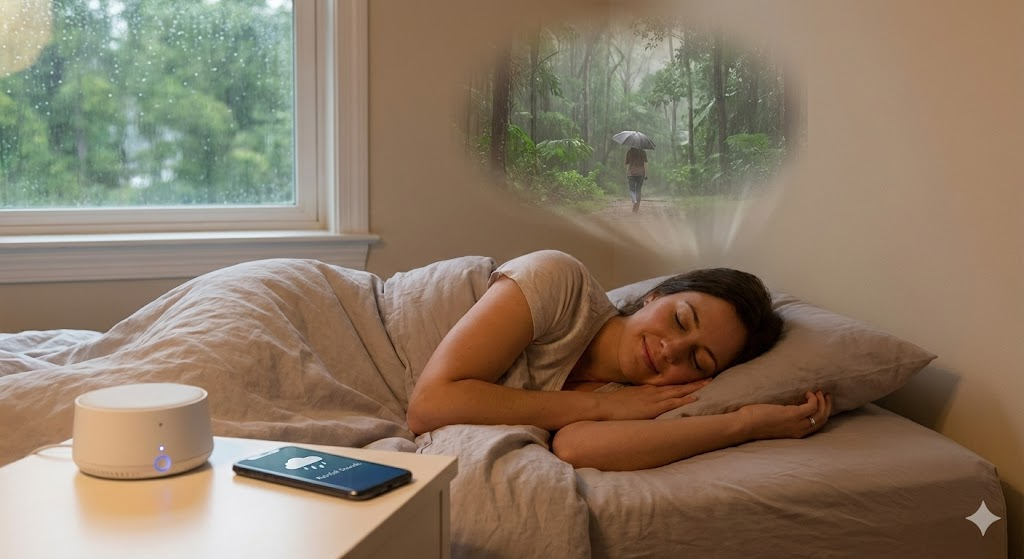
Picture yourself feeling warm, safe, and relaxed while listening to rain outside. This mental image supports the body’s natural rest response and helps sleep arrive more easily.
Conclusion: why rain sounds work
Insomnia is common, but sleeping in silence is not natural.
The brain is built for rhythm, steady patterns, and signals of safety. The sound of rainfall to sleep, supported by pink noise, provides all three.
Using high-quality rain soundscapes instead of silence or harsh white noise works with the nervous system rather than pushing against it. The brain stays calm, alertness lowers, and rest becomes easier.
Sleep improves when the brain feels safe enough to fully let go.
FAQ: Rain Sounds, White Noise, and Sleep
Can I play rain sounds all night?
Yes. Continuous pink noise can reduce night awakenings.
Is rain better than white noise machines?
For many people, yes. The rain sounds smoother and more natural than artificial white noise.
Do headphones work better?
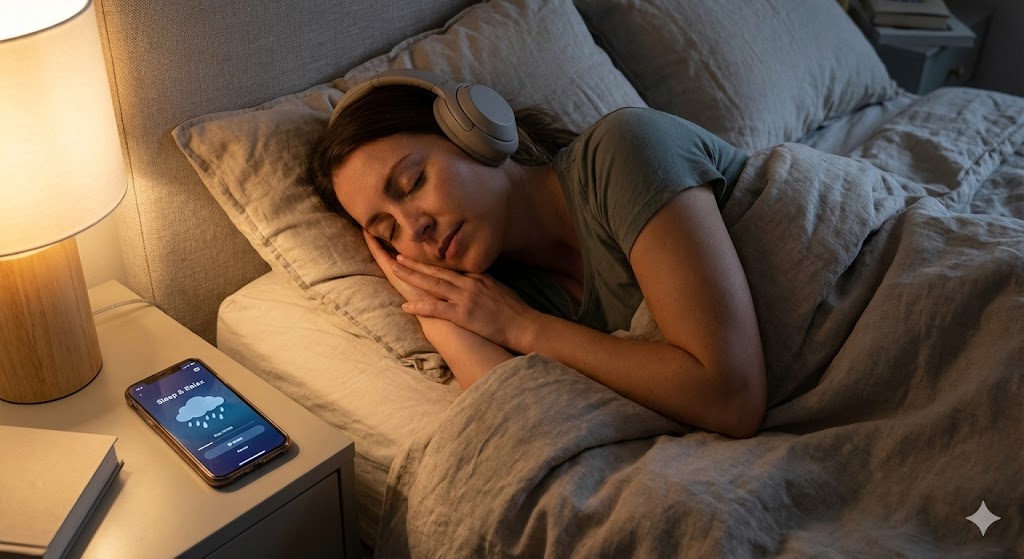
A speaker works, but sleep headphones allow fuller immersion in 3D soundscapes.
Share via: